
Graeme Gardiner's work on Knole's 17th century pedigree rolls
Conservator of the Sackville pedigree rolls and ennoblement documents
Interviewed by Veronica Walker-Smith in October 2024
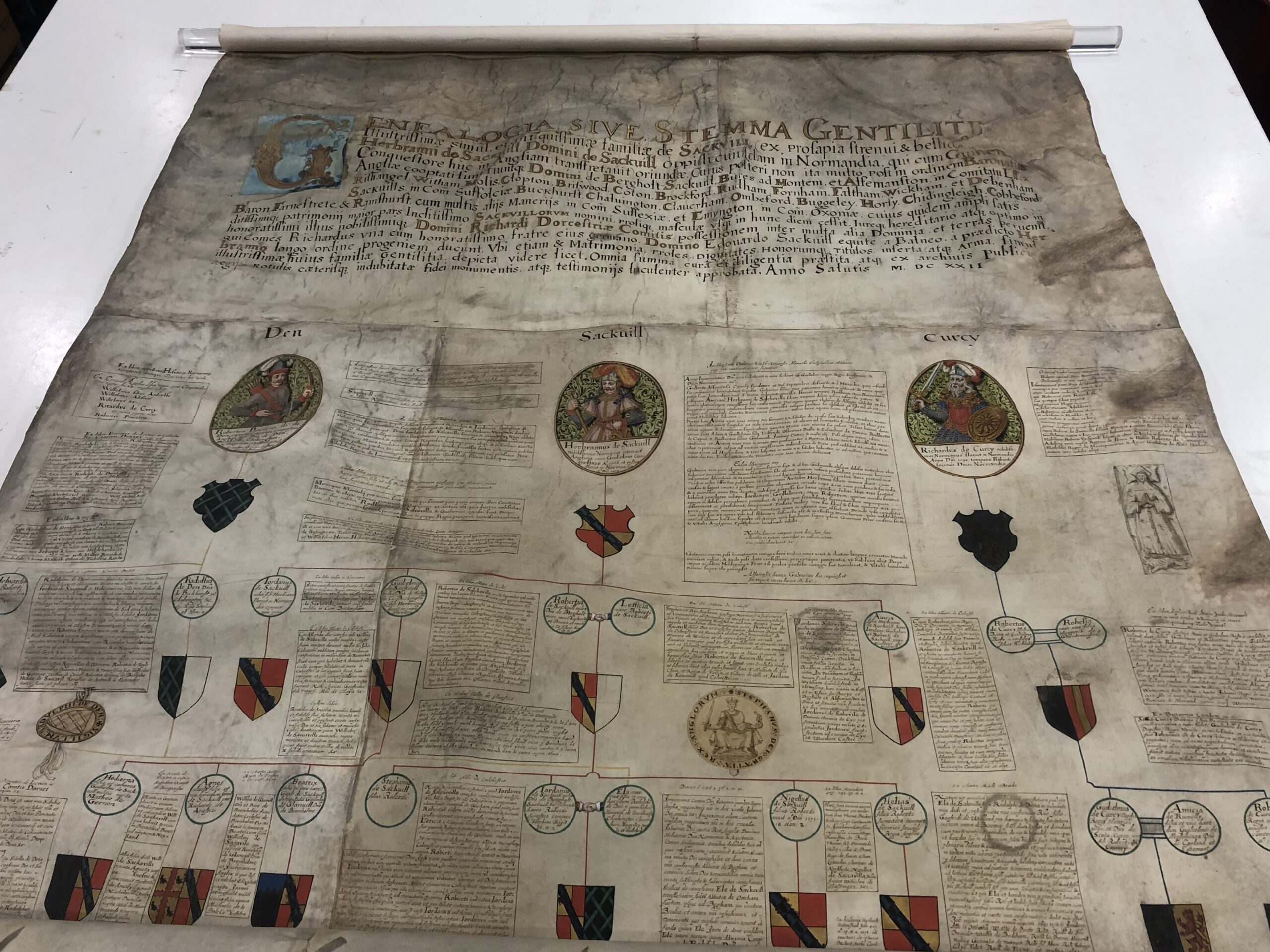
Rare width of one and a half cow skins
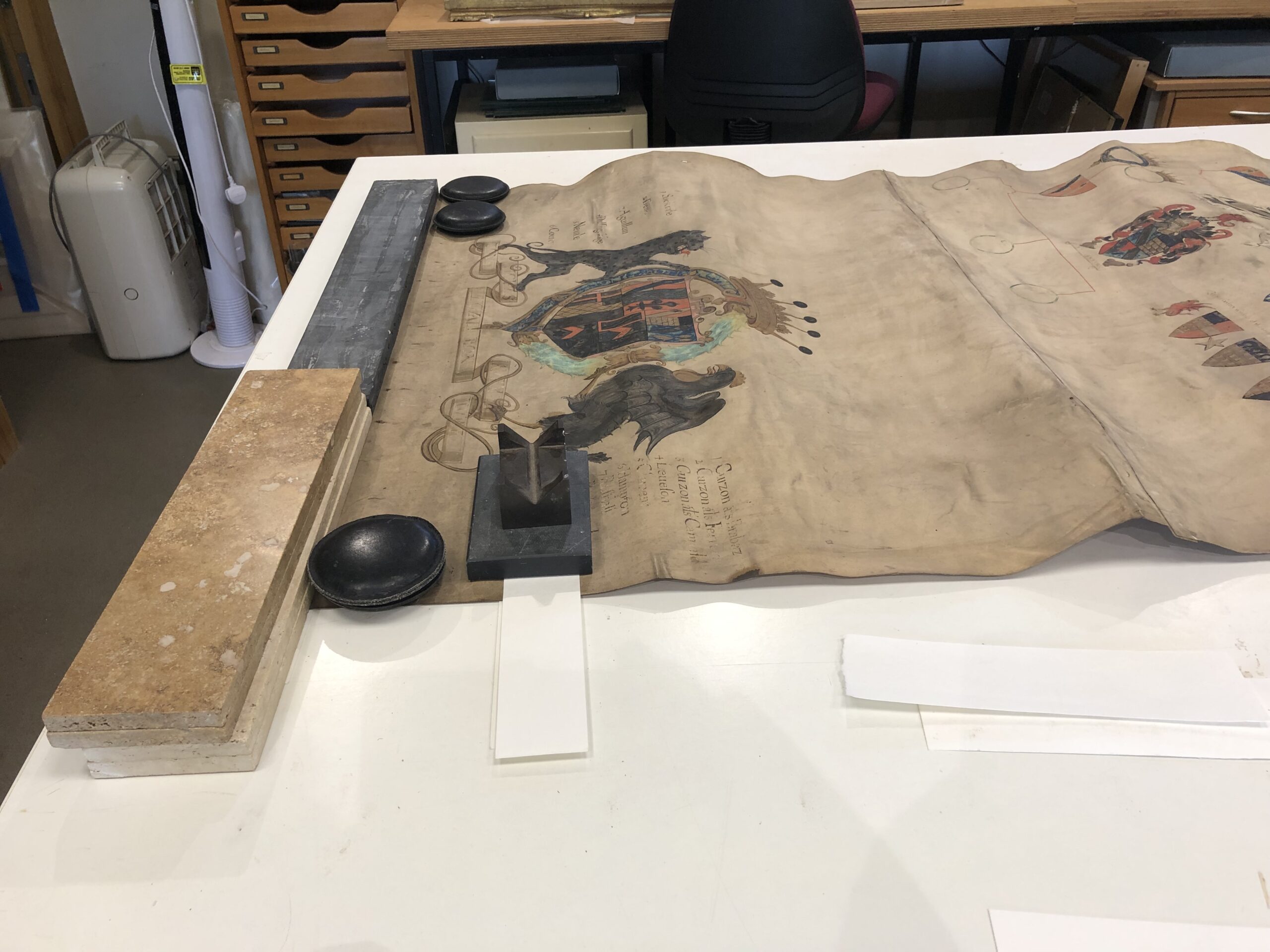
Cockling and undulations as each skin reacts to relative humidity
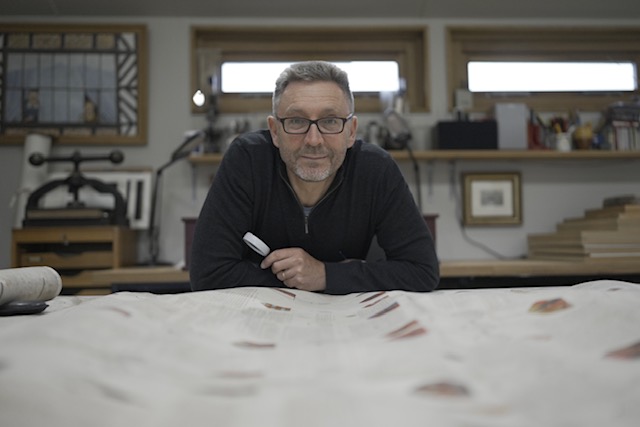
Graeme Gardiner, conserving Knole's pedigree rolls
NT Images/Blast Films/Millie Dobres
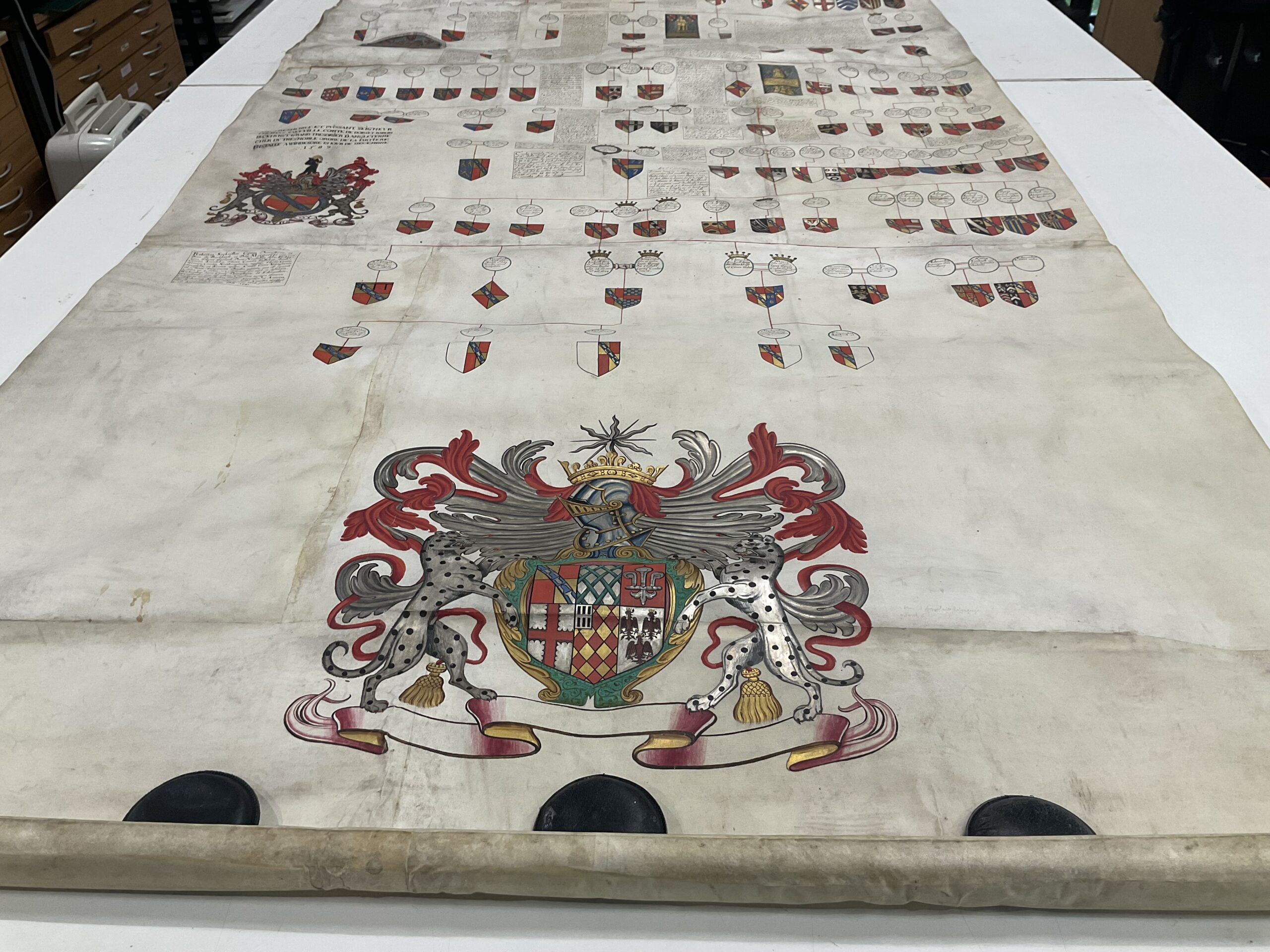
Untarnished silver revealed at the end of a 16-foot pedigree roll
NT Images/Graeme Gardiner
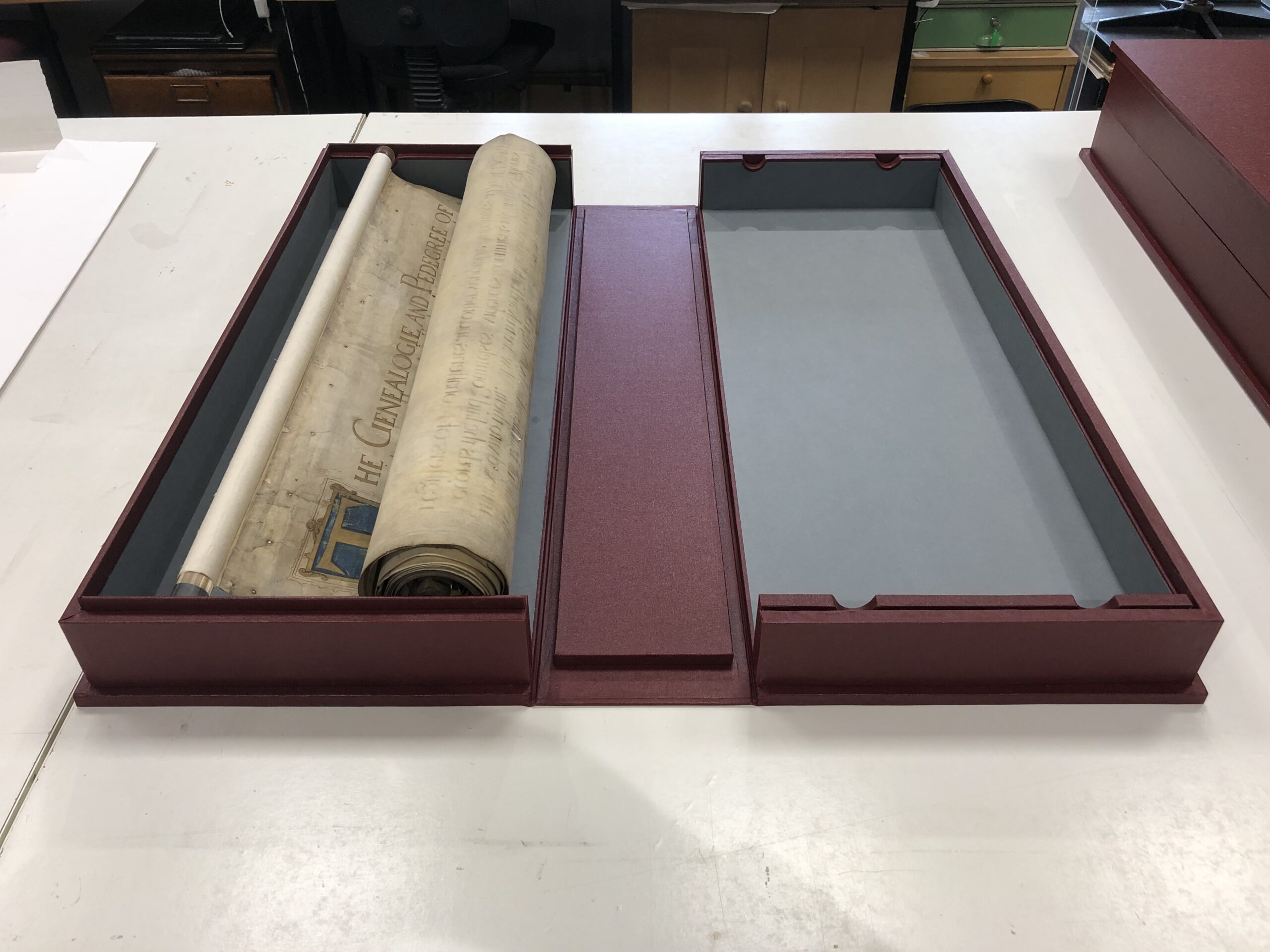
Bespoke 'Solander' box for both display and storage of Knole's pedigree rolls
Rare one-and-a-half-cow skin wide parchment
“This is interesting; now talking to the people at the College of Arms, they are unaware of many pedigrees that are more than one skin wide because it becomes so much more involved. Why make something that’s more than one skin wide when it just becomes so much more complicated? So this is sort of a skin and a half.
The problem that having one-and-a-half-skin wide is: parchment expands and contracts, much more than paper. And when you attach one skin of parchment to another, as has happened here: head to tail, head to tail, and side to side, each skin reacts on its own to what’s going on in the environment. So just because you’ve attached 10 skins together, it doesn’t mean they will work together. You’ve basically got 10 little pockets, or big pockets, of expansion and contraction.
And where they expand and contract, they’re either going to pull at each other and pull the adhesive apart, which hasn’t happened. Or they’re going to pull at each other and create this very extreme cockling and undulation. Now if you then add another half-skin, and alternate that, you’ve got even more pressures, which is why this looks like a rough North Sea on a bad day. And there’s nothing that we can do about that. We can’t contain that.”
The Big Reveal of 400-year-old untarnished silver
“The use of lead white as the white pigment comes with a sting in the tail. Because lead white is a beautiful colour. It’s a very clean white. It’s very opaque. It’s a good mixer. It holds its own when compared to vermilion and cinnabar, and the other medieval colours. But it turns black with time – which is a bit of a catastrophe, if you think that all the white bits of a painting become black.
They’ve not had the protection that a manuscript would provide. Clearly, they’ve been rolled up. And that rolling has provided a certain amount of protection. You’ll see it provided an incredible amount of protection for the silver that’s been used extensively as a colour. And the larger pedigree in particular, at the end of the roll which clearly isn’t exposed very much, the silver is virtually untouched by tarnish. And I’ve never seen that before. That is a first for me. And when we unrolled it, for a first occasion. That was the – for me, the ‘big reveal’.
And all of this, for me is just enhanced: the gold paint, clearly it’s the gold pigment that’s used extensively and the silver as well. Seeing the silver and the gold work together is quite remarkable. And for me, it’s a one-off, I’ve never seen it like this before. Not that I’ve worked on many of these things. But where I’ve worked on manuscripts or illuminated books, it’s unusual to see.
Time period
This page was added by Veronica Walker-Smith on 29/05/2025.

Comments about this page
For those of you who may be interested , the bespoke ‘ Solander’ cases that house the scrolls were made by ; David , FitzSamuel-Nicholls of Great Dunmow , Essex . Uk .
Several members of the Church Monuments Society have spotted what looked to us like drawings of family monuments on the earlier of the pedigree rolls. The use of monuments to establish ancestry is a fascinating and complex topic. Unfortunately, we only had fleeting glimpses of what we thought might be monuments. Did you by any chance photograph the pedigree rolls while they were being conserved? and if so, is there any way we could look at the photographs?
Thank you Professor Gray for your comment. We do indeed have more detailed images of the monuments which you and your colleagues at the Church Monuments Society may be able to help us identify. I will contact you directly by separate email. Best wishes, Veronica Walker-Smith
Add a comment about this page