
Highly regarded as an expert in 16th and 17th century British architecture, painting and the decorative arts, Maurice Howard regards Knole as a very special place. He not only supervised two key PhD theses on Knole, but has also visited Knole since the age of 14. He travelled on his own by bus from West London to Kent, enjoying the atmosphere of Knole, lying largely ‘asleep’ over the decades. On the 60th anniversary of visiting Knole, he shared his memories in a wide-ranging interview for the Knole Oral History archive.
Maurice Howard remembers visiting NT houses from the 1950s
Professor Emeritus of Art History at the University of Sussex, and eminent architectural historian, remembers 60 years of visiting Knole
Interviewed by Veronica Walker-Smith in 2022
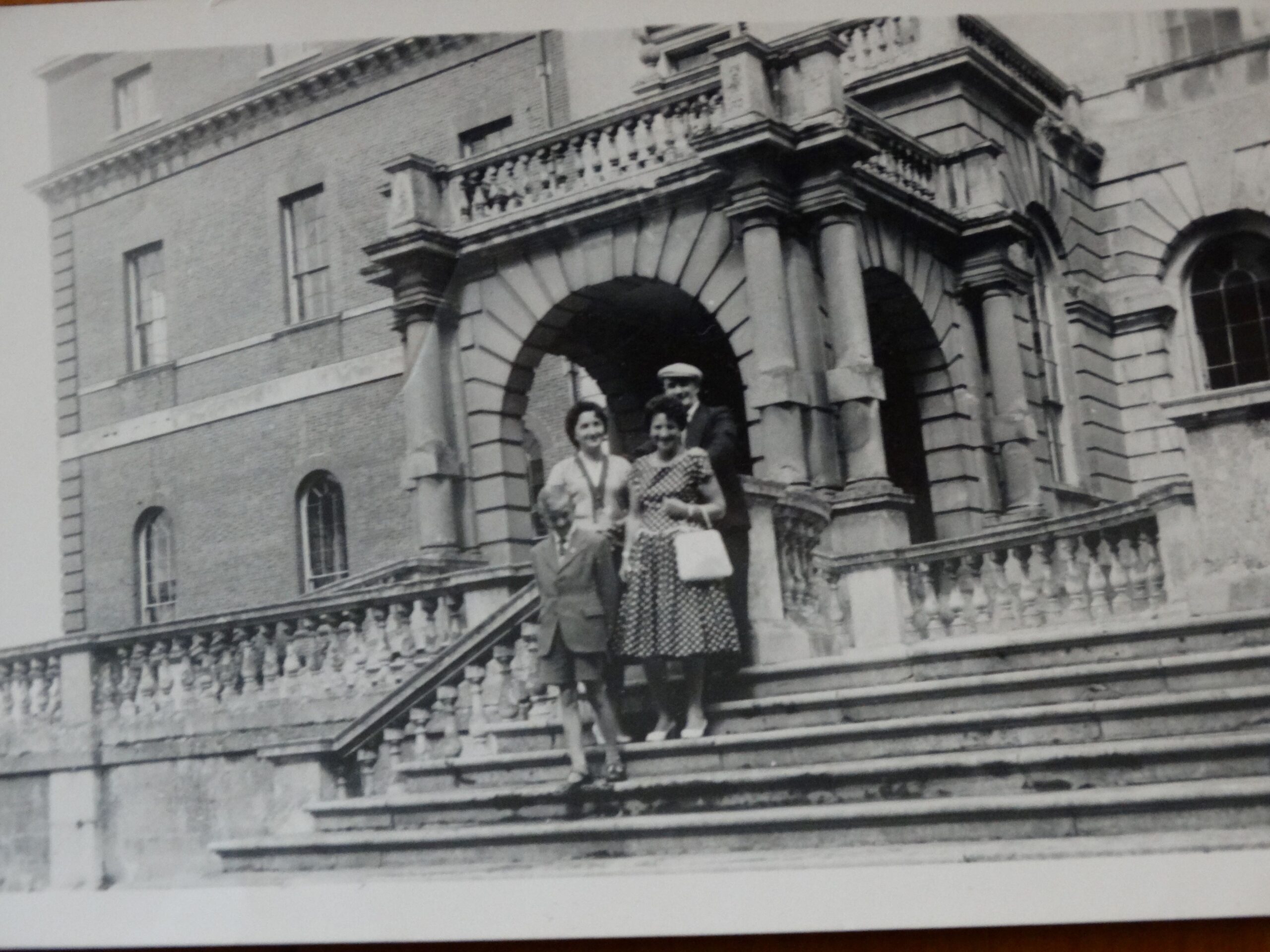
Maurice with his family outside Clandon in 1959
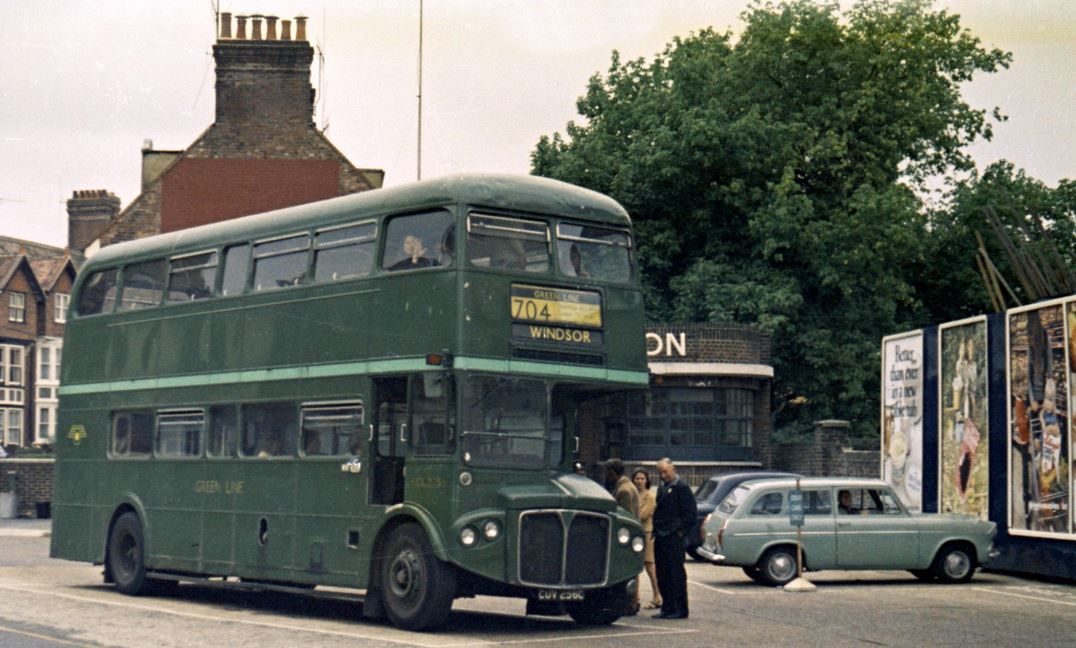
1960s 704 Green Line bus
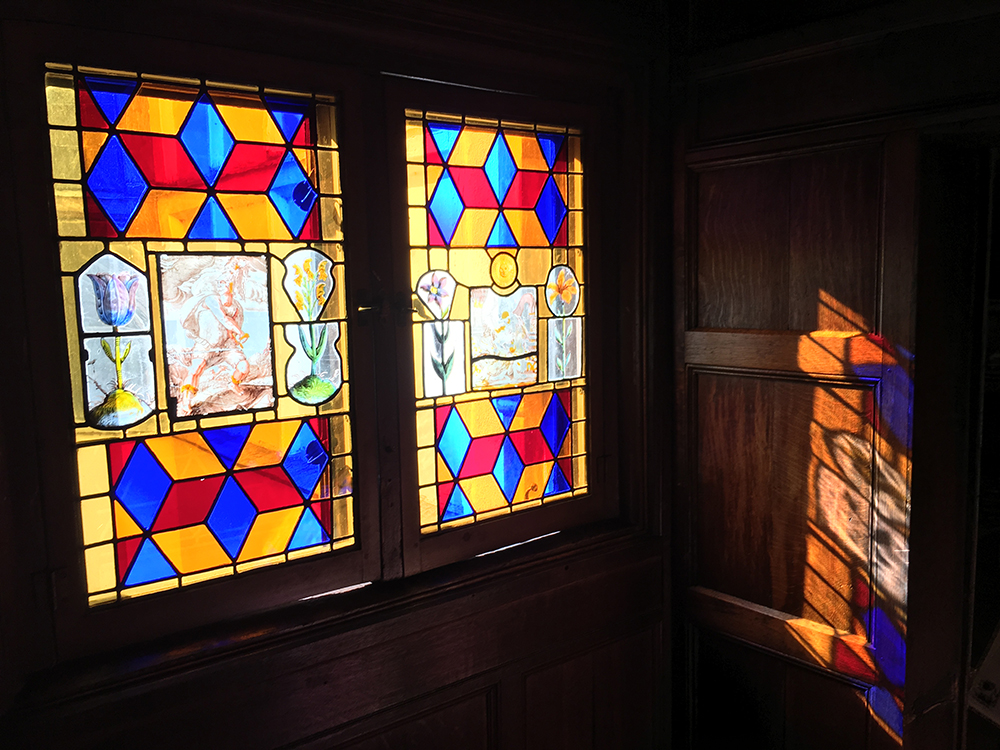
Stained Glass reflecting sunlight into Knole's Prayer Closet

Professor Maurice Howard, OBE, in 2020, University of Sussex
Visiting great houses from an early age
M.H.: I grew up in west London and from a very early age, from eight or nine years old, I was encouraging my parents to take me around old buildings, country houses. Hampton Court played a key role in this because it was the end of a trolley bus line. So, I can remember when I was 11 or 12 and could take myself out on my own, going to Hampton Court, to which I’d been going since I was four.
It so happens that amongst my earliest memories of going to country houses are key National Trust properties because they were very near where we lived. I went to Ham and Osterley many times. In those days, in the late 50s, early 60s, they were run, of course, by the Victoria and Albert Museum. Behind the scenes, great scholars like Peter Thornton were working on the inventories and doing things, but what you saw when you went to those places were houses asleep: not many visitors. Yes, they had blinds on the windows of course; there was some sense of the importance of conservation but they were left in the state in which the National Trust took them over.
Rooms were crowded with furniture; there wasn’t much sense in the presentation, of how these houses once operated. You were shown state rooms full of treasures, which was a perfectly laudable way of showing off these buildings, just in those immediate decades after they came into as it were, public ownership, into the ownership of the National Trust.
First encounter with Knole in August 1962
M.H. There’s a photograph of myself with my mother and my grandparents on the steps of Clandon. In the late 50s I think it came into the Trust, so I was there pretty sharpish in my short trousers, making sure we saw what went on.
And then in 1962, and this is now the 60th anniversary year, I was staying with my grandparents in west London, Mondays to Fridays while my parents were both working, I used to go and stay with my grandparents because it was easier to get up to London from their house. And along the Great West Road went the 704 and 705 Green Line buses. I think they went all the way to Tunbridge Wells, I’m not sure but they certainly went through London and down to Sevenoaks.
So, I came to Knole in August 1962. Guided tours, and I distinctly remember – already, I was just 14 – already, of course, I was rather averse to guided tours because I wanted to spend a long time standing in rooms and thinking about them. It was something to do with sense of place, the people who had lived here. And now thanks to Ed [Town] and Alden [Gregory] in particular, I know a lot more about the people who worked here and made things. But in those days, it was the great historic figures, the men and women, the elite society who lived here, who were very prominent.
But I remember the guide to Knole showing me round and she did take two hours going through, which was phenomenal when you think of it. And I remember one of the things was in that little closet at the end of the Brown Gallery before you go into the Ballroom, there’s a piece of stained glass, and the sun was shining through it. And she turned to us all and said, “There you are, there’s the sun shining through. You can come to Knole a hundred times and not see that.” Now this was a very casual comment, but I thought, yes, it did make me think on that very day, you need to come to places like this over and over again.
The bus journey and spending pocket money
M.H.: So yes, many, many great fond memories of being here over that long, long period of time.
Interviewer: I love the fact that you could actually remember the Green Line bus numbers, Maurice!
M.H.: Yes, yes.
Interviewer: Did you say it was a two and a half-hour ride?
M.H. I think it was a two and a half-hour ride, yes. because it stopped. It went through Greenwich and then down into Kent. Of course, it stopped here, there and everywhere.
I came in the summer. I remember other seasons when I came – also in summer – I remember coming in 1969 the day after Ann Jones won Wimbledon. Because I’m a great tennis fan and I’d been out and bought all the newspapers that morning and I still had some of them under my arm when I came on the Green Line bus. Then it was an even longer journey because I came from our house at Langley because the buses start at Windsor. So, it was an even longer journey that day.
And I sat in the park and ate my packed lunch, avoiding the deer. Yes, that was one of several visits here in the 1960s.
Interviewer: Do you remember how much the ticket was?
M.H.: Well I can give some comparative things. I had exactly one pound per week to spend. And with that pound I would go to London three of the five days, or go on a journey like this. And I think the half-fare on the Travel-around-London was something like one and sixpence. So that’s seven and a half pence. So, my trip to Knole was probably two shillings or two shillings and sixpence each way. Something like a third of the spending money I would have had for that trip.
So, always packed lunches, I couldn’t afford to eat or buy food anywhere. I always, of course, would find some extra money to buy a guide book because I could never do that. So, I have seven, eight, possibly a dozen guide books to Knole going back over time, I should think.
Time period
This page was added by Veronica Walker-Smith on 13/02/2025.

No Comments
Add a comment about this page